
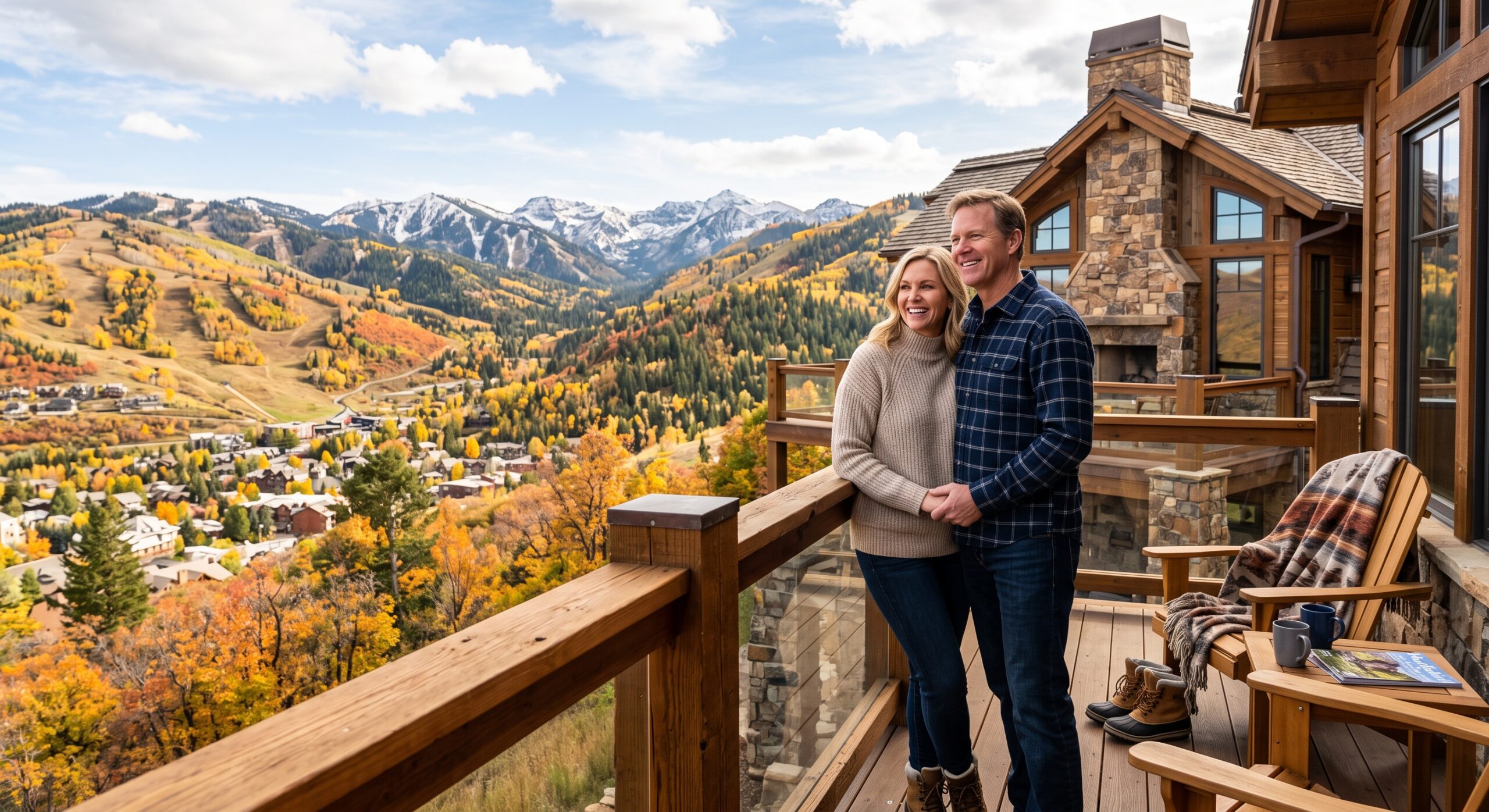
Owning a home in Park City can sound like the perfect combination of lifestyle and real estate investment.
You have a place to escape to during ski season, somewhere to spend summer weekends with family, and potentially an asset that can become part of your long-term financial plan.
But buying a second home is different from buying your primary residence.
You aren’t simply asking, “Do I love this house?”
You’re also asking:
Will this property work for the way I actually plan to use it?
That question becomes especially important in Park City, where location, property type, HOA rules, rental regulations, operating costs, and proximity to skiing can dramatically change the ownership experience.
If you’re considering buying your first second home in Park City, here’s a practical framework to help you get started.
Start With How You Plan to Use the Home
Before looking at listings, think about how often you’ll realistically use the property.
Will it be:
- A weekend getaway?
- A family vacation home?
- A ski-season retreat?
- A summer property?
- A future retirement home?
- A combination of personal use and rental income?
There isn’t necessarily a right answer.
But your answer should influence the type of property and location you choose.
For example, a buyer who wants to spend most winter weekends skiing may place a much higher value on ski access than someone who plans to spend several months in Park City during the summer.
Similarly, a buyer who wants rental income needs to investigate rental eligibility before becoming emotionally attached to a property.
Location Matters More Than the Listing Photos
Park City is not one uniform real estate market.
Old Town, Deer Valley, Canyons Village, Park Meadows, Promontory, and other areas can offer very different lifestyles and ownership experiences.
Consider what matters most to you:
- Ski access
- Walkability
- Restaurants and shopping
- Privacy
- Views
- Golf
- Summer activities
- Proximity to Main Street
- Access to trails
- Airport convenience
- Rental potential
Two homes with similar prices can have completely different long-term appeal depending on their location.
This is one reason it’s useful to explore neighborhoods before narrowing your search to a particular home.
Decide Between a Condo, Townhome, or Single-Family Home
Your first second home doesn’t necessarily need to be a large detached house.
A condo can be an attractive option for buyers who want a lower-maintenance property and easy access to amenities.
A townhome can offer a middle ground between condominium living and a detached home.
A single-family home may provide more privacy, space, and flexibility, but it can also come with more maintenance responsibilities.
Think about how much ownership responsibility you actually want.
If your goal is to arrive in Park City, enjoy your time, and leave without worrying about snow removal, exterior maintenance, or landscaping, a managed condominium may make more sense.
If you want privacy, a yard, and more control over the property, a single-family home may be worth the additional responsibility.
Don’t Assume You Can Rent It
This is one of the most important points for a Park City second-home buyer.
If you’re planning to offset some of your ownership costs with short-term rental income, verify the property’s rental eligibility before making an offer.
Park City’s nightly-rental rules can vary based on the property’s zoning and location, and HOA or community rules can add another layer of restrictions. An HOA may prohibit or limit rentals even when local regulations allow them.
In other words:
A property being advertised as a vacation rental does not automatically mean that every buyer can use it as one.
Before purchasing, confirm the applicable zoning, rental license requirements, HOA rules, minimum rental periods, and any other restrictions.
Don’t rely solely on what a listing says.
Understand the Difference Between a Second Home and an Investment Property
Your intended use can affect the financial side of the purchase.
A property primarily intended for your personal use may have different financing, tax, insurance, and operating considerations than a property purchased primarily as a rental investment.
If rental income is part of your plan, don’t simply look at projected gross revenue.
You also need to account for:
- Property management
- HOA dues
- Utilities
- Cleaning
- Repairs
- Maintenance
- Insurance
- Taxes
- Furnishings
- Platform or booking costs
- Vacancy
- Snow-related expenses
A property that produces impressive gross rental income may look very different after all of the expenses are deducted.
Look Carefully at HOA Fees and Rules
If you’re buying a condo or property within an HOA, don’t treat the HOA fee as just another line on the closing statement.
Read the documents.
Understand what the HOA fee covers and what it doesn’t.
Depending on the property, HOA expenses may contribute toward things such as exterior maintenance, landscaping, snow removal, amenities, insurance, or other shared services.
Also review:
- Rental restrictions
- Pet policies
- Parking rules
- Storage
- Renovation restrictions
- Special assessments
- Reserve funding
- Maintenance responsibilities
- Minimum rental periods
Utah’s homebuyer guidance specifically recommends reviewing HOA rules, rental restrictions, and property modification requirements before committing to a purchase.
Don’t Forget Property Taxes
Property taxes are another expense that can be easy to overlook when you’re focused on the purchase price.
Utah’s residential property-tax treatment distinguishes qualifying primary residences from second homes and other properties. A second home may not receive the same primary-residence exemption, so buyers should understand the applicable tax treatment when calculating their ownership costs.
This is particularly important when comparing the cost of owning a second home with simply renting a vacation property when you want to visit.
Ask your real estate and tax professionals to help you understand the numbers for the specific property you’re considering.
Budget for More Than the Mortgage
One of the biggest mistakes first-time second-home buyers make is calculating affordability using only the mortgage payment.
Your actual ownership cost may include:
Mortgage + property taxes + insurance + HOA + utilities + maintenance + management + furnishings + repairs
And mountain properties can bring additional maintenance considerations.
Before purchasing, create a realistic annual ownership budget.
Ask yourself:
“If I don’t receive any rental income for several months, am I still comfortable owning this property?”
If the answer is yes, you’re starting from a much stronger financial position.
Think About the Property During All Four Seasons
It’s easy to fall in love with Park City during a perfect winter weekend.
But you’re buying a property that exists year-round.
Think about how the home works during:
Winter:
Snow removal, heating, access, parking, ski storage, and winter maintenance.
Spring:
Snowmelt, drainage, landscaping, and changing road conditions.
Summer:
Outdoor living, hiking, biking, golf, festivals, and neighborhood activity.
Fall:
Maintenance, weather changes, preparation for winter, and seasonal occupancy.
A second home should fit your lifestyle beyond ski season.
Consider Your Long-Term Plans
Buying a second home can be a lifestyle decision today and a financial decision tomorrow.
Perhaps you eventually want to spend more time in Park City.
Maybe it becomes a retirement property.
Maybe your children will use it.
Or perhaps you eventually decide to sell and move the equity into another investment.
Think about the property five or ten years from now—not just next ski season.
Properties with strong location, desirable amenities, good access, and broad buyer appeal can potentially provide more flexibility when your circumstances change.
Get Financing Organized Before You Shop Seriously
If you’re financing the purchase, talk with your lender early.
Second-home financing can have different requirements than financing a primary residence, and your financial situation may determine what price range makes sense.
Getting pre-approved can also make your search more efficient.
Instead of looking at every beautiful home in Park City, you can focus on properties that fit your actual budget and financial plan.
And if you’re a cash buyer, remember that there are still significant costs beyond the purchase price.
Work With Someone Who Understands the Local Market
Online searches are great for getting familiar with Park City.
They are not always enough to understand the nuances of a particular property.
A local real estate professional can help you investigate questions such as:
- Is this location convenient for my lifestyle?
- How does this neighborhood compare with nearby areas?
- Are nightly rentals allowed?
- What are the HOA restrictions?
- What are the typical ownership costs?
- How does this property compare with recent sales?
- What should I know about the building or community?
- How might the property appeal to future buyers?
The goal isn’t simply to find a beautiful property.
It’s to find the right property for you.
A Practical Second-Home Buying Checklist
Before making an offer on your first Park City second home, make sure you’ve considered:
Lifestyle
- How often will I use the property?
- Do I want ski access?
- Do I want walkability?
- Do I need privacy or amenities?
Financial
- Can I comfortably afford the property without rental income?
- What will my annual ownership costs be?
- What are the property taxes?
- What are the HOA dues?
- What will insurance and maintenance cost?
Rental
- Are short-term rentals permitted?
- Does the zoning allow them?
- Does the HOA allow them?
- Is a license required?
- Are there minimum rental periods or other restrictions?
Property
- Is the property in good condition?
- What maintenance will I be responsible for?
- Are there upcoming assessments?
- How old are the major systems?
- What is the resale potential?
Long-Term
- Could this eventually become a retirement home?
- Will it work for my family several years from now?
- Would I be comfortable owning it if the market changes?
The Bottom Line
Buying your first second home in Park City should be exciting—but it should also be practical.
The right property isn’t necessarily the biggest house, the most luxurious condo, or the one with the best-looking listing photos.
It’s the property that fits your lifestyle, your budget, your intended use, and your long-term goals.
Take your time.
Understand the neighborhood.
Review the numbers.
Verify rental rules before relying on rental income.
And don’t be afraid to ask questions that go beyond, “Do I like this house?”
Because when you’re buying a second home in Park City, you’re not just buying a place to stay.
You’re buying an experience, an ongoing responsibility, and potentially a long-term asset.
The more carefully you evaluate the property before you buy, the more likely you’ll be able to enjoy it after you close.

Leave a Reply